
When you think about British food and culture, what comes to mind? Fish and chips? A full English breakfast? A cup of tea?
Another famous British tradition is Nachmittagstee. This delicious meal usually includes small sandwiches, scones with cream and jam, cakes and, of course, tea!
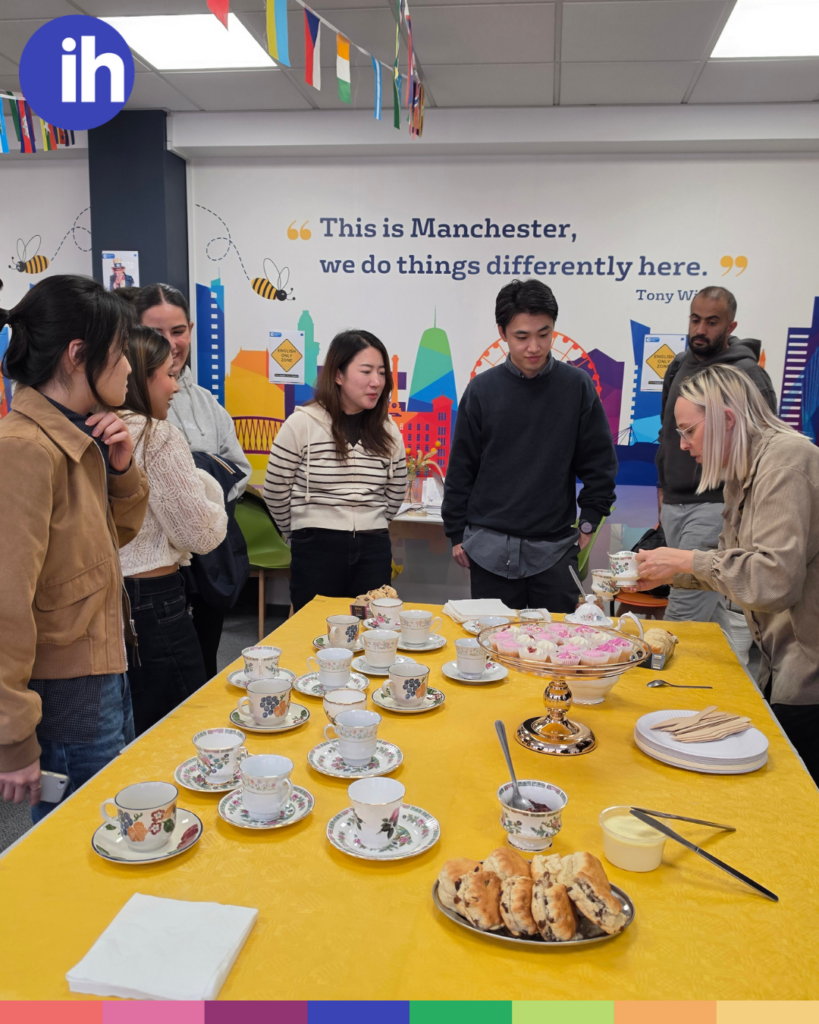
At IH Manchester, afternoon tea is an activity that we often enjoy with our students. It is a great opportunity to try traditional British food, learn more about life in the UK and spend time with friends.
But where did afternoon tea come from? And why is it still so popular today?
The History of Afternoon Tea
Afternoon tea began in England in the early 19th century. At this time, many people ate their main evening meal quite late, sometimes at around 8 pm. This meant there was a long time between lunch and dinner.
A woman called Anna, the Duchess of Bedford, is often connected with the beginning of afternoon tea. She became hungry in the late afternoon and started asking for tea, bread and small cakes to be brought to her room.
She soon began inviting her friends to join her. The idea became popular, and other people started enjoying tea and small snacks in the afternoon too.
Over time, afternoon tea became an important social activity, especially for wealthy people. Friends would meet, talk and enjoy food together.
Today, people from all backgrounds enjoy afternoon tea. It is popular for special occasions, birthdays, celebrations and visits with friends and family. It is also a wonderful experience for visitors to the UK.
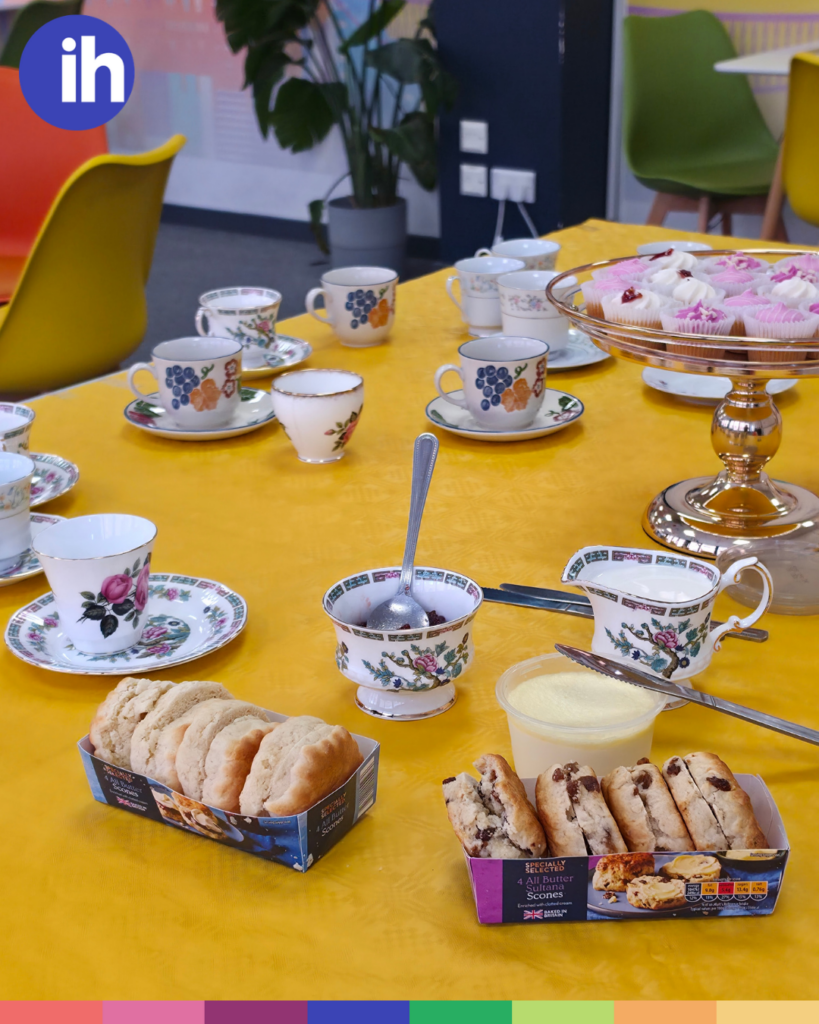
What Do You Eat at Afternoon Tea?
A traditional afternoon tea usually has three different parts.
First, there are sandwiches. These are often small and made with different fillings. Popular choices include cucumber, egg and mayonnaise, cheese or smoked salmon.
Next come the scones. Scones are small pieces of baked bread, usually served warm. They are often eaten with jam and cream.
This is where an important question begins!
Do you put the jam on first and then the cream? Or do you put the cream on first and then the jam?
People in different parts of the UK have different opinions about this. There is no need to worry too much about the correct answer – you can simply eat your scone in the way that you enjoy most!
Finally, there are the sweet treats. These can include small cakes, biscuits and other delicious desserts.
And, of course, there is tea. Traditionally, people drink black tea with milk, but today there are many different choices. You might prefer green tea, fruit tea or herbal tea.
Afternoon Tea Is About More Than Food
Afternoon tea is not only about eating delicious food. It is also about spending time together.
Traditionally, afternoon tea was a social occasion. People met with friends and family, talked about their lives and enjoyed a relaxing afternoon.
This is still true today.
For international students, sharing food can be a great way to meet new people. When you sit around a table together, it is easier to start a conversation.
You might talk about the food, compare British food with food from your own country or share your favourite meals.
At IH Manchester, our students come from many different countries. Activities such as afternoon tea give students the opportunity to meet people from other cultures and make new friends.
It can also be a great chance to practise English in a relaxed and natural way.

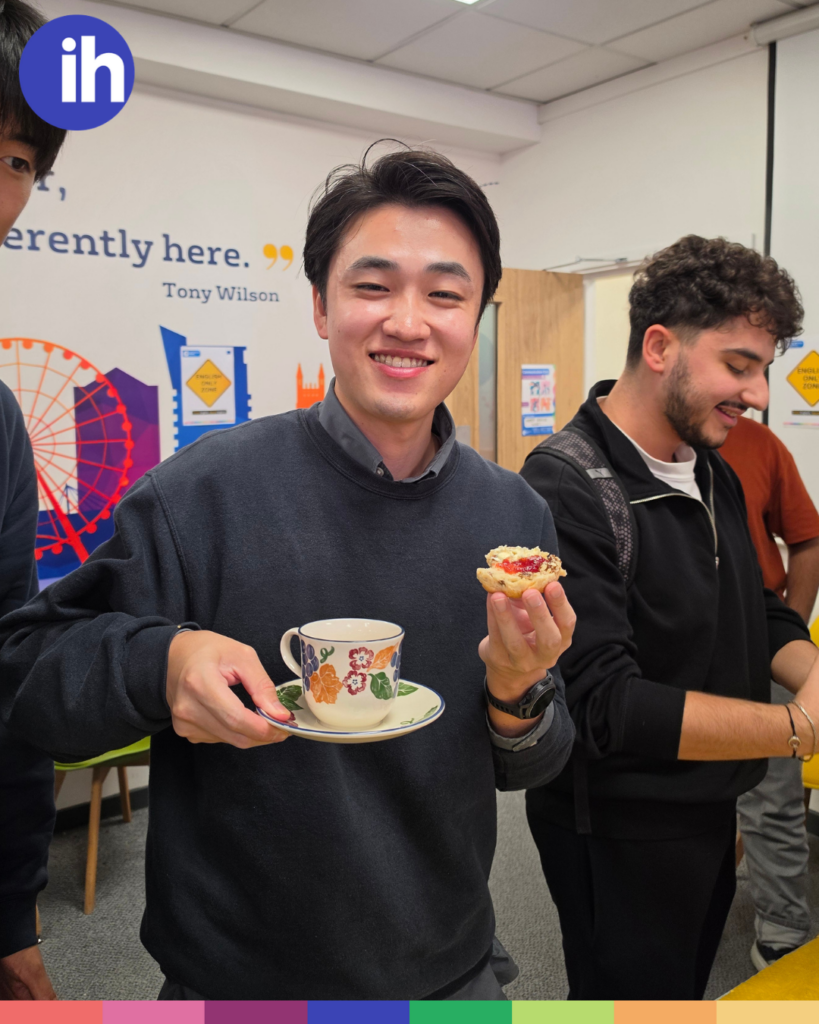
A Delicious Way to Learn About British Culture
Learning English is about more than grammar and vocabulary. It is also important to learn about the culture of the country where you are studying.
Trying British food is one way to do this.
Afternoon tea gives international students the chance to experience a famous British tradition. You can try new foods, learn some new vocabulary and discover more about the history of the UK.
You might learn words such as scone, jam, cream, sandwich Und teapot. You can also learn useful phrases for talking about food, such as:
- “Would you like some tea?”
- “Have you tried this?”
- “This is delicious!”
- “What do you usually eat in your country?”
- “Would you like another cup of tea?”
Activities like this can help students use English in real situations.
Enjoy Afternoon Tea in Manchester
Manchester is a fantastic city for international students. It has a rich history, exciting culture, great restaurants and cafés, and many opportunities to try traditional and modern British food.
Afternoon tea is one of the many British experiences that you can enjoy during your time in the UK.
At IH Manchester, we believe that learning English should also be fun. Our social activities give students the opportunity to experience life in Manchester, meet new people and practise their English outside the classroom.
Sharing afternoon tea is a simple activity, but it can create some wonderful memories. You can enjoy delicious food, have interesting conversations and learn more about British culture.
So, if you visit the UK, why not try afternoon tea?
Make yourself a cup of tea, enjoy a warm scone with jam and cream, and spend some time talking with friends.
It is a delicious British tradition – and a wonderful way to experience life in the UK!

Afternoon tea – a light meal eaten in the afternoon, usually with tea, sandwiches, scones and cakes.
Tradition – a custom or activity that has continued for a long time.
Scone – a small piece of baked bread, often eaten with jam and cream.
Jam – a sweet food made from fruit and sugar.
Cream – a thick dairy product that is often eaten with scones.
Treat – something special and enjoyable to eat or do.
Social – relating to spending time with other people.
Relaxed – calm and comfortable.
Opportunity – a chance to do something.
Experience – something that happens to you or something that you do.
Erfahren Sie mehr über die Englischkurse, die wir in Manchester anbieten: IH Manchester English Courses


 English (UK)
 Português do Brasil
 Español
 日本語
 Deutsch
 Italiano
 한국어
 العربية
 Türkçe
 简体中文
 Français